I am Xingzhuo Chen, my English name is Gesa. I am currently studying astronomy in Texas A&M University. Welcome to my personal webpage!
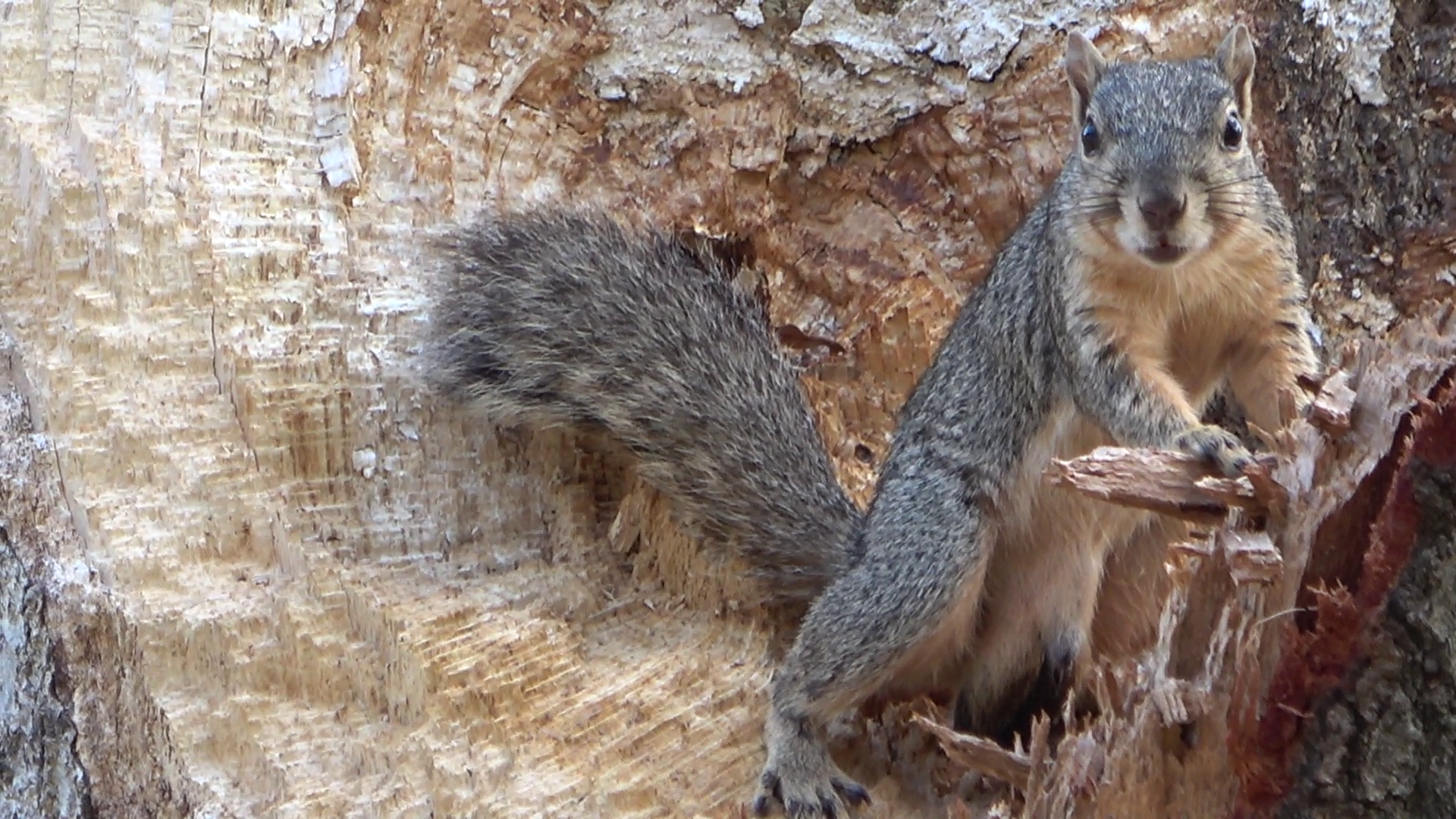
I like playing data science, riding bike, writting science fiction and pointing my camera to squirrels.
I encountered this creature on campus, I guess it is a gray squirrel?
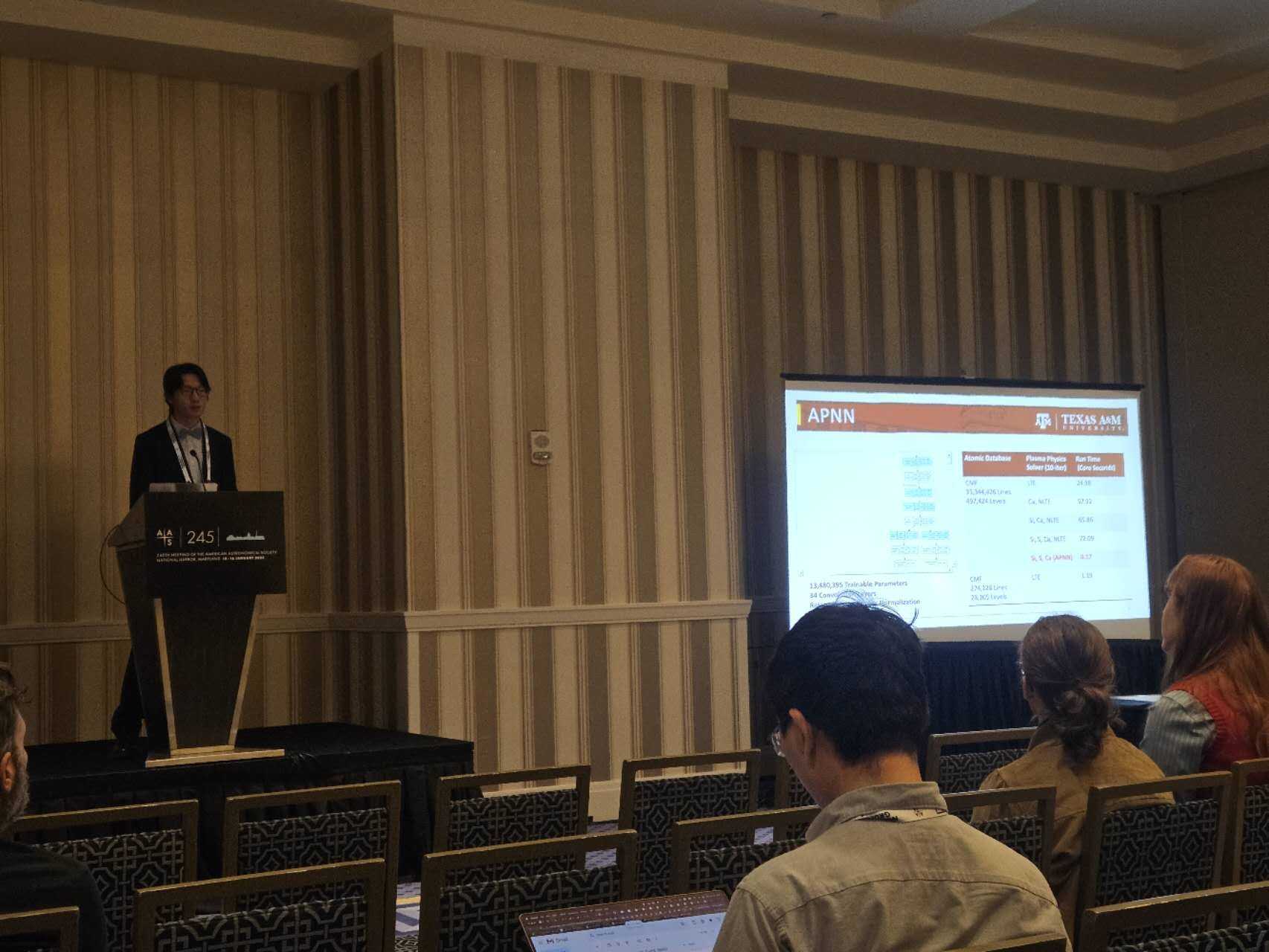
I attend the AAS245 meeting in National Harbor, Maryland. I provided an oral presentation in the meeting with the title "GesaRaT: The Gesamtkunstwerk of Radiative Transfer for Supernovae". We have the fastest radiative transfer simulation program for supernovae, and it can calculate NLTE, spectropolarimetry, and resolved images in 3-D time-dependent simulations.
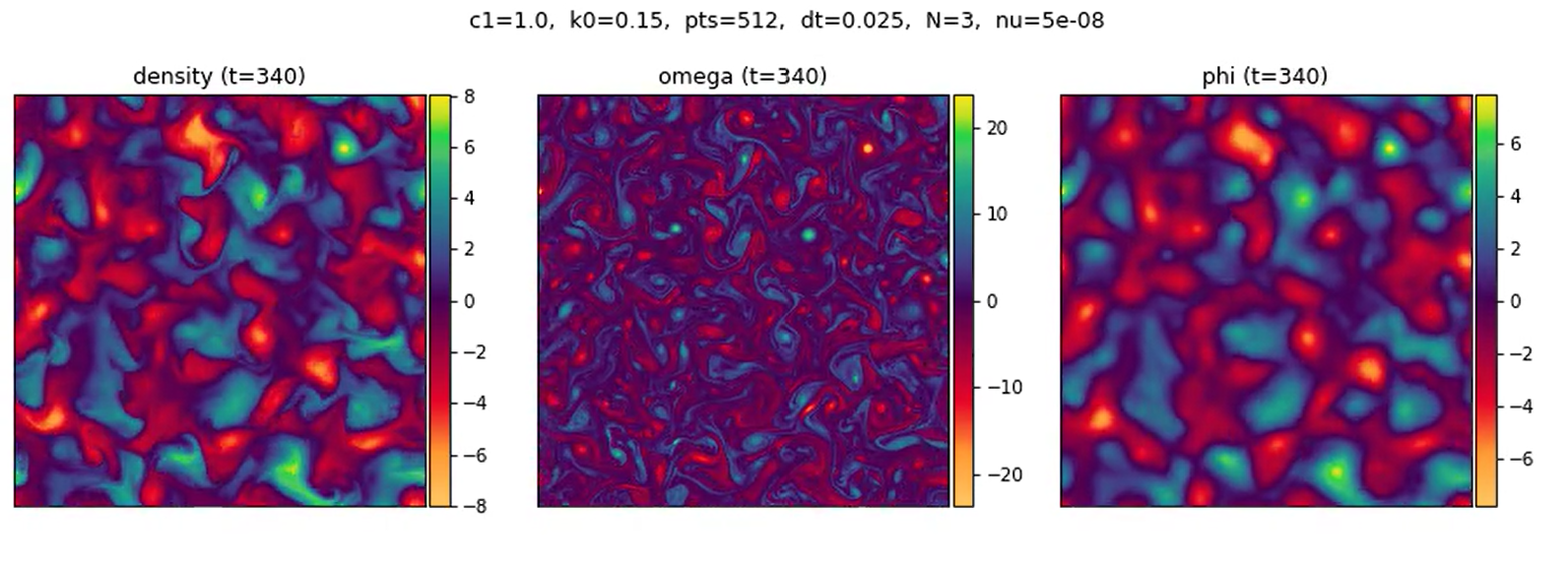
I wrote a brief note of the Hasegawa-Wakatani (HW) equations. HW equations are used to explain the turbulent activity of ions and electrons in a Tokamak nuclear fusion device. With most of the particles confined by the strong background magnetic field, the turbulence arises from the perpendicular drift of ions and parallel motion of electrons. A numerical simulation as shown in picture predicts the fluctuation of density and electrostatic field.
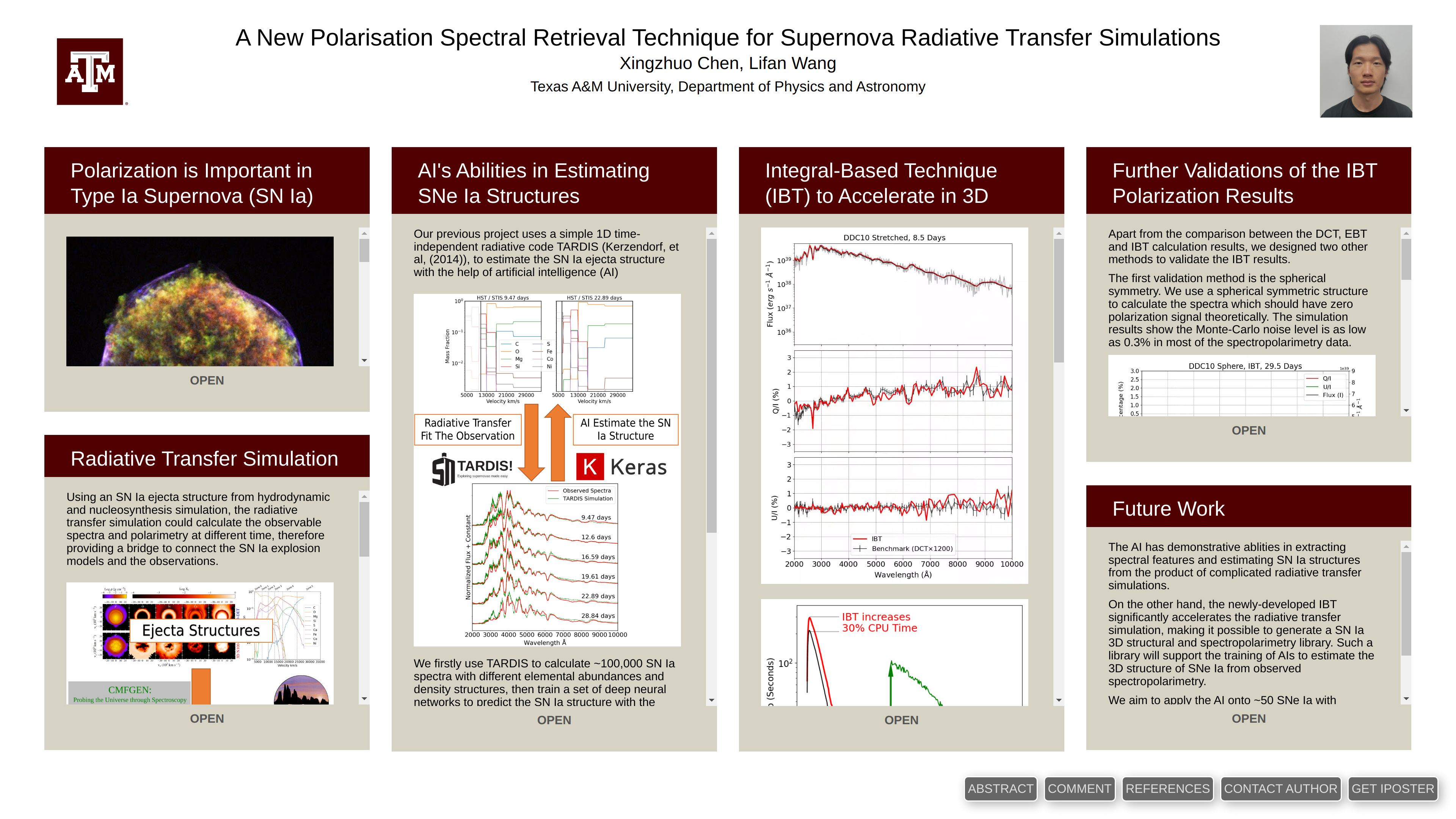
I attend the AAS243 meeting in New Orleans, and this is my interactive poster. I share the recent breakthrough in the three dimensional radiative transfer simulation and introduce the next steps in applying artificial intelligence in the supernova researches.
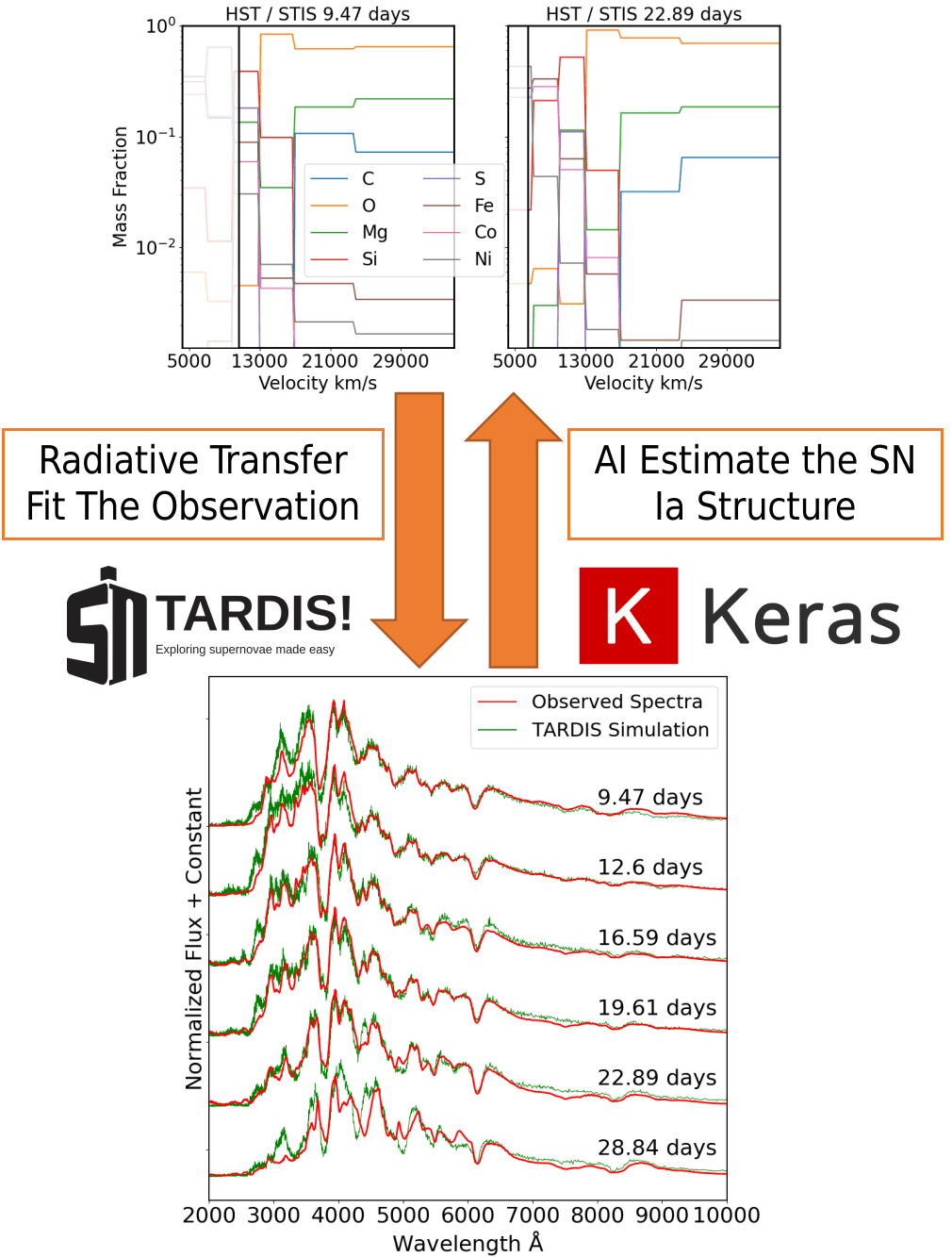
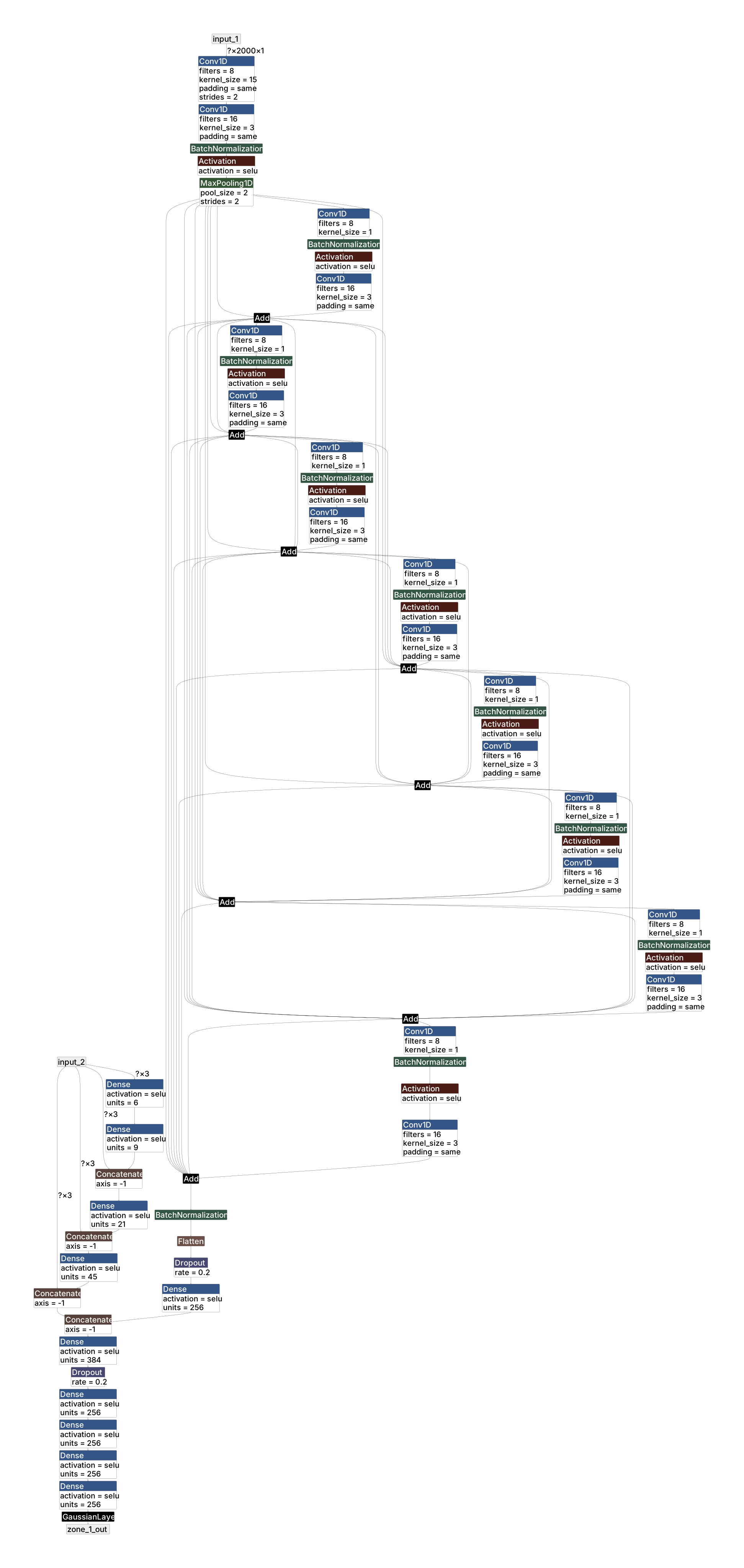
Following our previous study of supernova analyses, we train a set of deep neural networks based on the 1D radiative transfer code TARDIS to simulate the optical spectra of Type Ia supernovae (SNe Ia) between 10 and 40 days after the explosion. The neural networks are applied to derive the mass of 56Ni in velocity ranges above the photosphere for a sample of 124 well-observed SNe Ia in the TARDIS model context. A subset of the SNe have multi-epoch observations for which the decay of the radioactive 56Ni can be used to test the AIAI quantitatively. The 56Ni mass derived from AIAI using the observed spectra as inputs for this subset agrees with the radioactive decay rate of 56Ni. AIAI reveals that a spectral signature near 3890 Angstrom is related to the Ni ii 4067 Angstrom line, and the 56Ni mass deduced from AIAI is found to be correlated with the light-curve shapes of SNe Ia, with SNe Ia with broader light curves showing larger 56Ni mass in the envelope above the photosphere. AIAI enables spectral data of SNe to be quantitatively analyzed under theoretical frameworks based on well-defined physical assumptions.
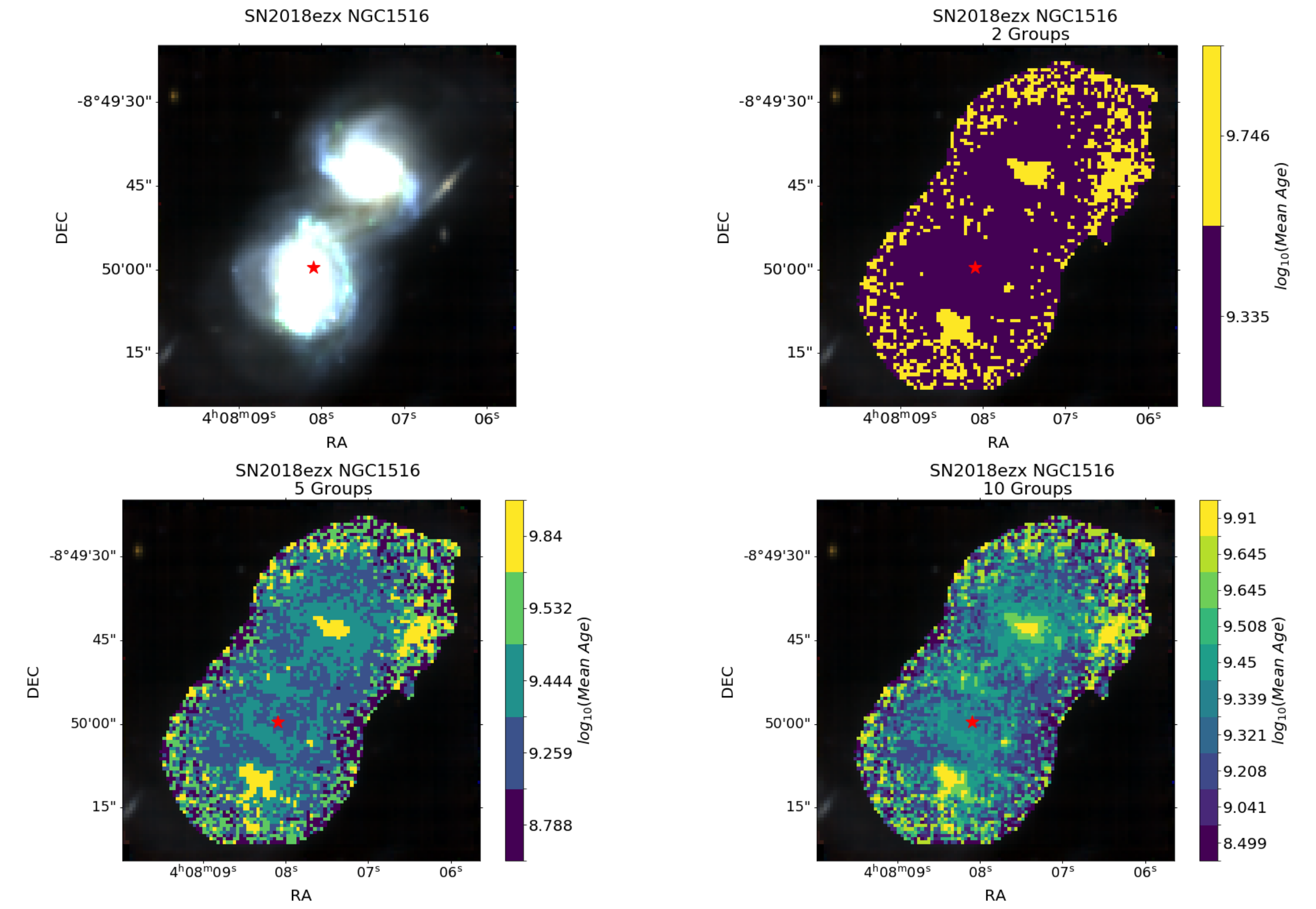
Spectrograph, an instrument includes the function of imaging and spectroscopy. Every time a spectrograph works, a big cube of data will be generated. Just like this picture of galaxy, every pixel is a spectrum. Such a powerful facility can tell the stellar population, gas, and dust, of a galaxy pixel-to-pixel. Me, Thomas Russell, and King utilized the public data from the best spectrograph in the world -- MUSE, to investigate the star populations in the type Ia supernova host galaxies. We developed an interesting algorithm to separate a galaxy into different stellar population groups, and study the relation between these groups and the supernova.
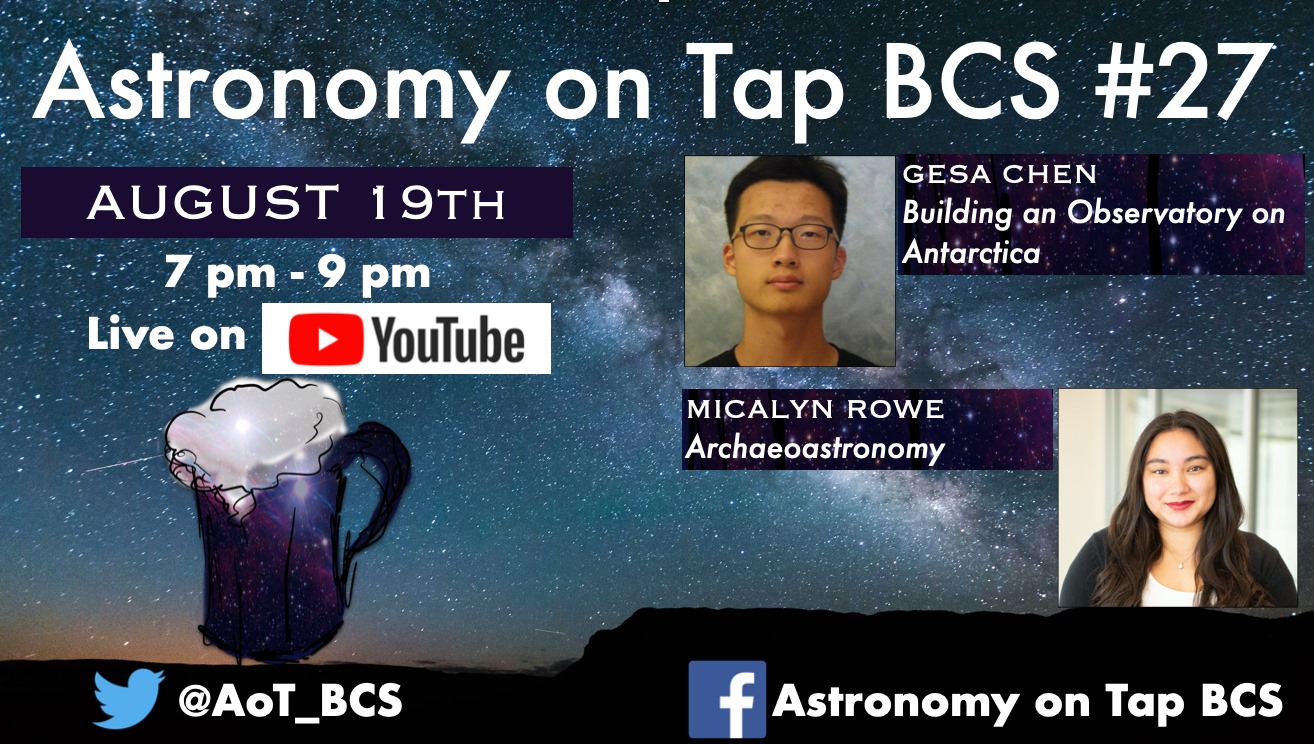
I presented "Buliding an Observatory on Antarctica" at the 27-th Astronomy on Tap in Bryan-College Station. Unfortunately I am not the one who really have been to Antarctica when I was at purple mountain observatory, I learnt a lot from these pioneers. Well, that place is the best location for observatories, and I am always prepared.
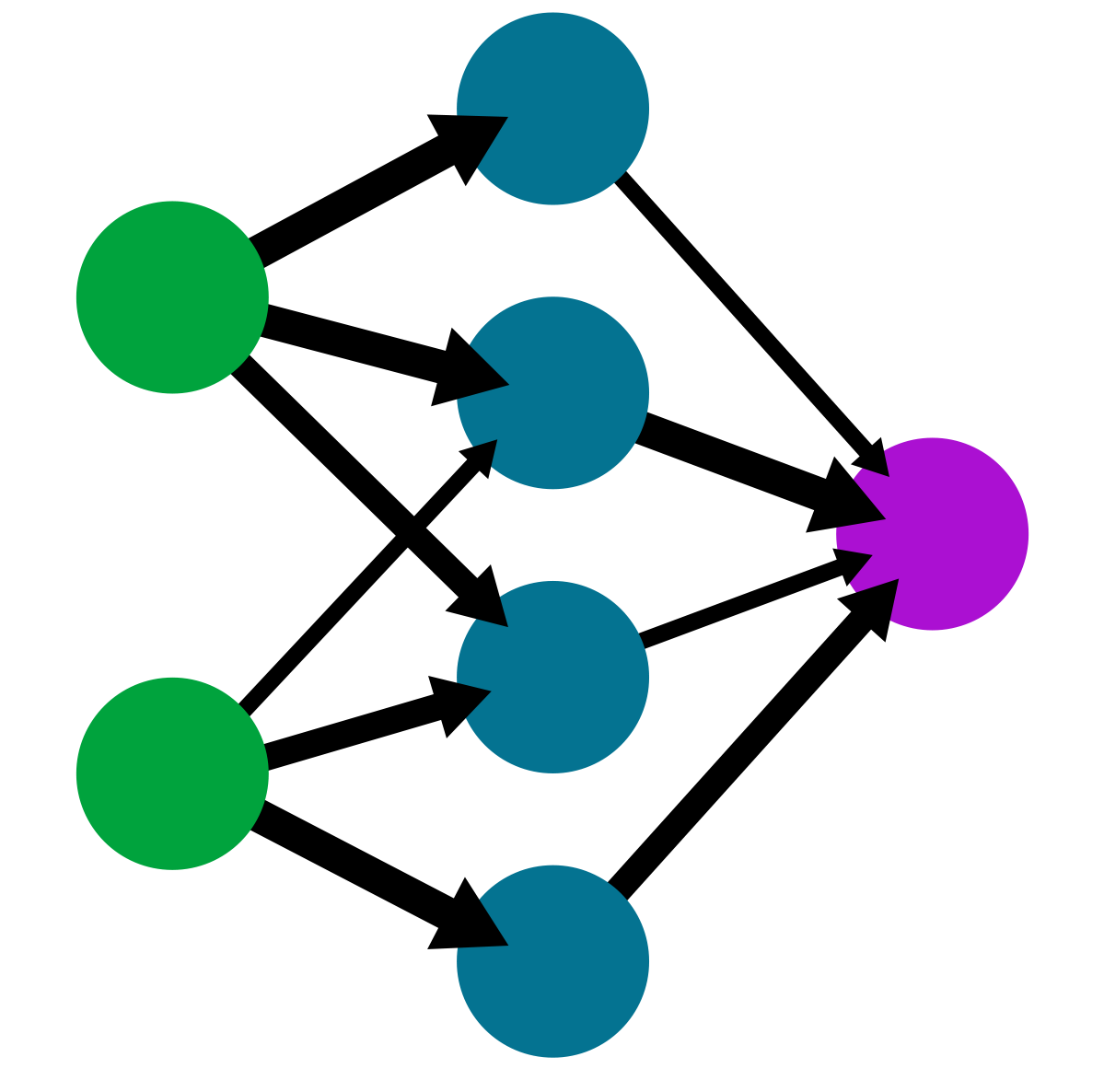
I prepared a short introduction about the math behind the neural network. It is quite simple and you can even try to build an example network using basic programming knowledge.
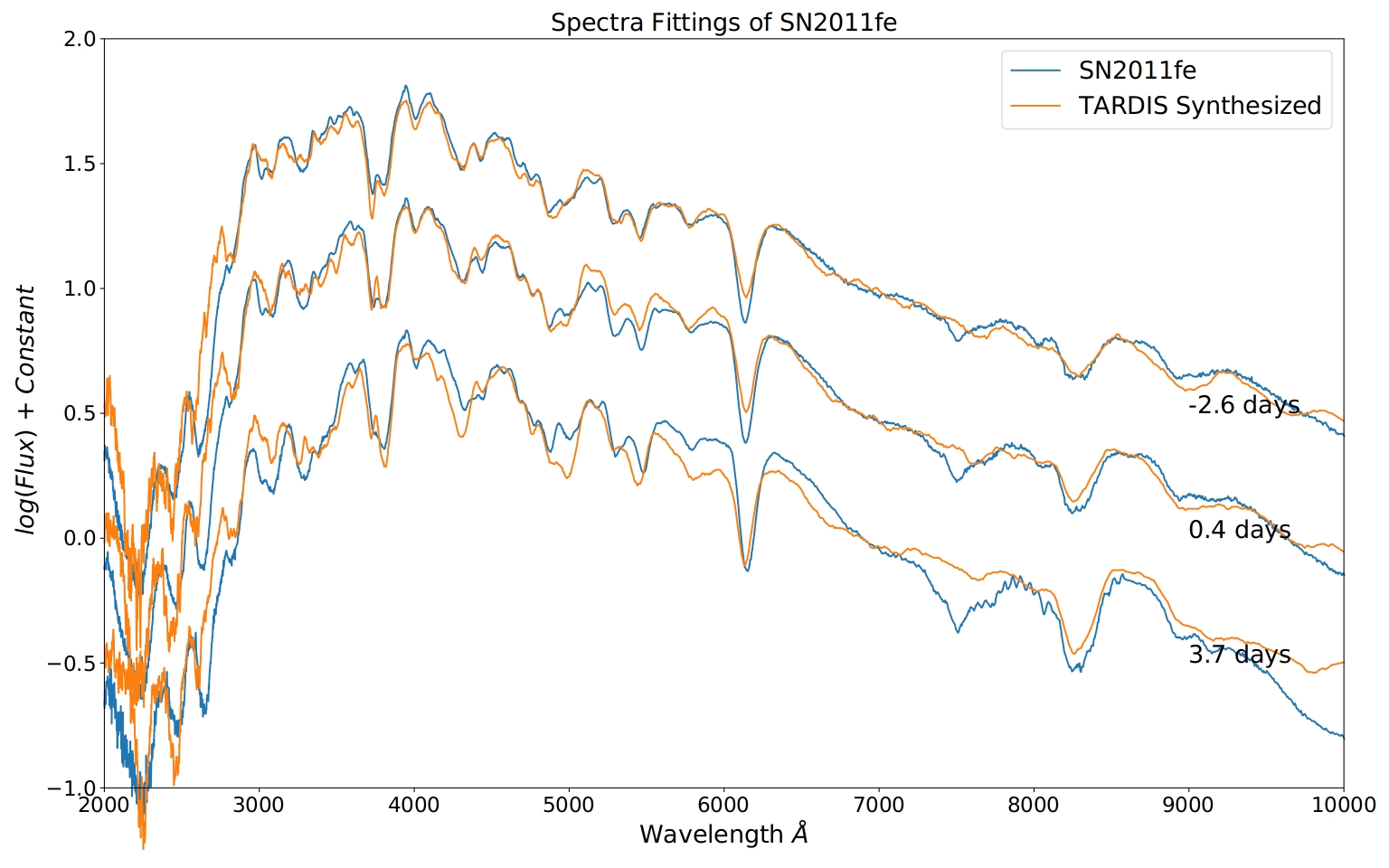
Me, Thomas Russell, and King found a radiative transfer simulation program -- TARDIS. This program is so incredably useful that can simulate a supernova spectra within a few CPU hours, given a 1-dimension supernova ejecta structure. We then use this program to simulate thousands of type Ia supernovae spectra with different element abundances, and train a neural network to predict element abundance from spectra. The trained neural network has let us found something, and we are still finding new things from the observed supernovae spectra.

For the next fantistic discovery.